Deliverable Management
Earned Value lives or dies at Level 5. The headline formula is simple — EV = Budget × % Complete — but the credibility of that number depends entirely on how % Complete is measured at the deliverable level.
The Earned Value thread
Every hour or dollar spent on a project should be traceable to a deliverable that is being produced. The progress of those deliverables is what earns the budget back as value.
- Budget — hours or cost set against the deliverable at award.
- % Complete — derived from objective gate weightings, not opinion.
- Earned Value — the product of the two, summed up the WBS.
- Variance — EV vs PV (schedule) and EV vs AC (cost).
L3 schedules summarise. They roll many deliverables and gates into a single bar.
L5 measures. Progress is entered against an individual deliverable's gates — IFD, IFR, IFA, IFC — at defined weightings.
L3 reports. Once L5 is captured, it rolls back up into the L3 activity for reporting and forecasting.
Progressing deliverables by gate
The most defensible way to measure % Complete on an engineering deliverable is by weighted milestone gates. Each gate (e.g. IFD 30%, IFR 60%, IFA 90%, IFC 100%) earns a fixed share of the deliverable's budget when reached.
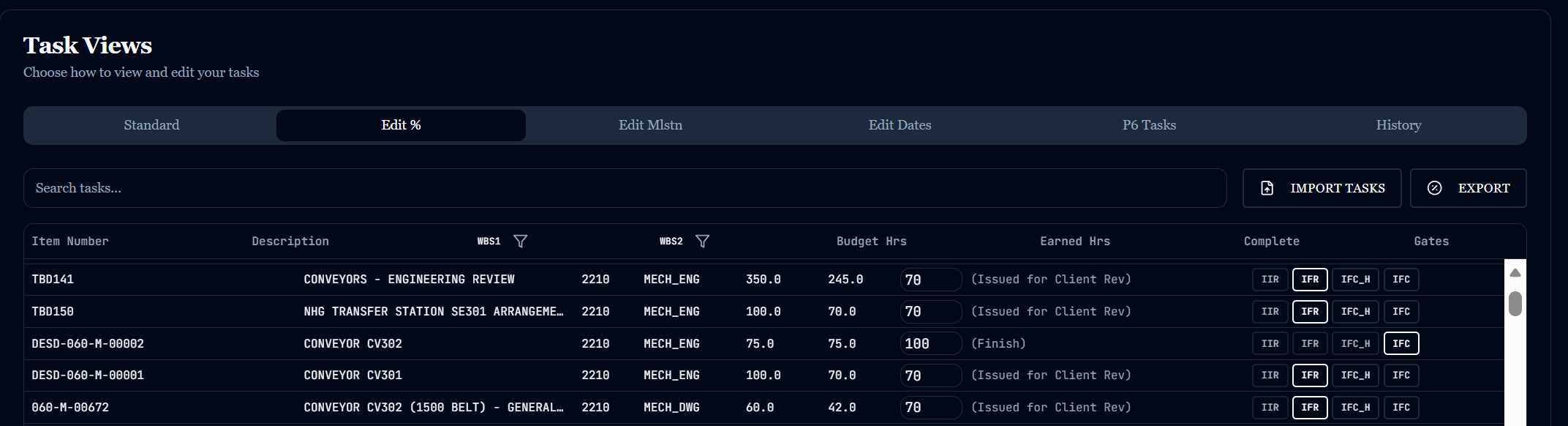
Defining the gateset
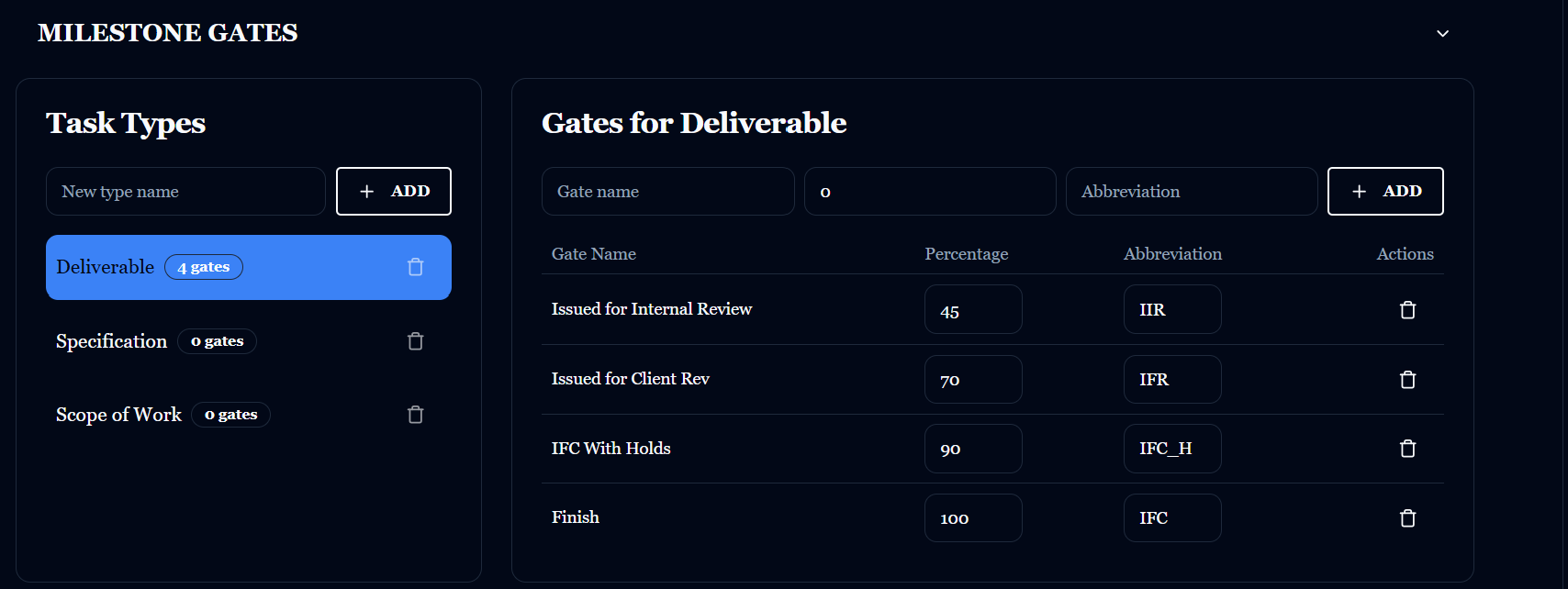
Before any deliverable can be progressed, you have to decide how it will actually be delivered to 100%. That route to completion is the gateset — the ordered list of issue points and their fixed weightings that together sum to 100%.
Not every deliverable follows the same path. Some are issued to the client only once and only need a short gateset such as Start → IDC → IFC. Others go through multiple formal client issues — IFR → IFA → IFC.
Getting the gateset right is the single most important calibration step in deliverable-based Earned Value.
Mapping deliverables to the L3 schedule
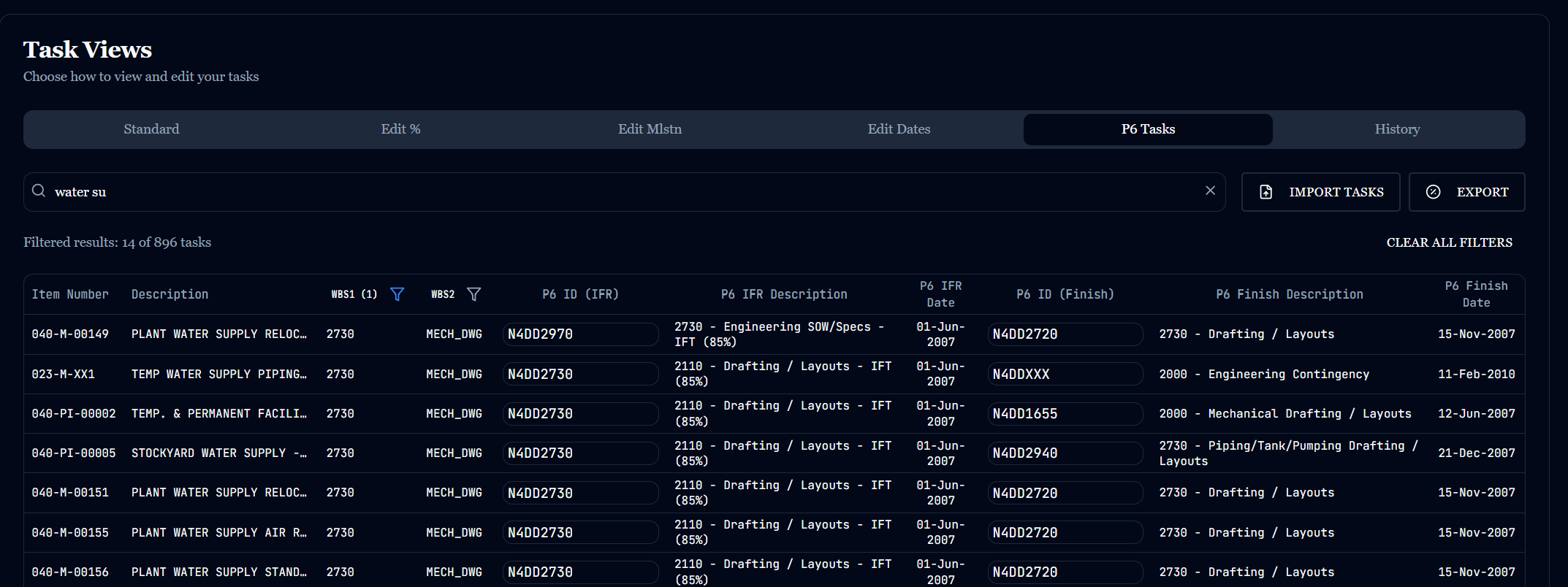
Level 5 deliverables don't live in a vacuum — they need to be tied back to the L3 schedule so that planned dates, forecasts and float context are visible while progress is entered.
Every deliverable maps to one L3 activity that represents its final gate (IFC / IFA / closeout).
The activity's planned, forecast and actual finish dates become the deliverable's dates.
Where the schedule explicitly tracks an intermediate issue (commonly IFR or IFT), map that gate to its own L3 activity.
This gives the deliverable two pulse points — interim and final.
How deliverables should be tracked
Where IPEXIQ fits
The Detailed Progress Tracker implements this directly — deliverable registers with gate-weighted % Complete, mapping to interim and final P6 activities, and a rolled-up Earned Value view per project and WBS.